Develop from your specification
Development or production is based mainly on the client’s design, specifications or reference product. PUEN helps turn the information into a workable product brief and coordinates the appropriate manufacturing route.
OEM · ODM · private label
For brands and organisations developing a defined bag, luggage or travel product, the practical route depends on the intended use, specification, quantity, construction, materials, budget and delivery requirements.
PUEN is a Singapore-based product development and sourcing partner. Through an established Asian manufacturing and supply network, we coordinate product definition, supplier selection, materials, sampling, production, relevant quality checks, packaging and delivery.
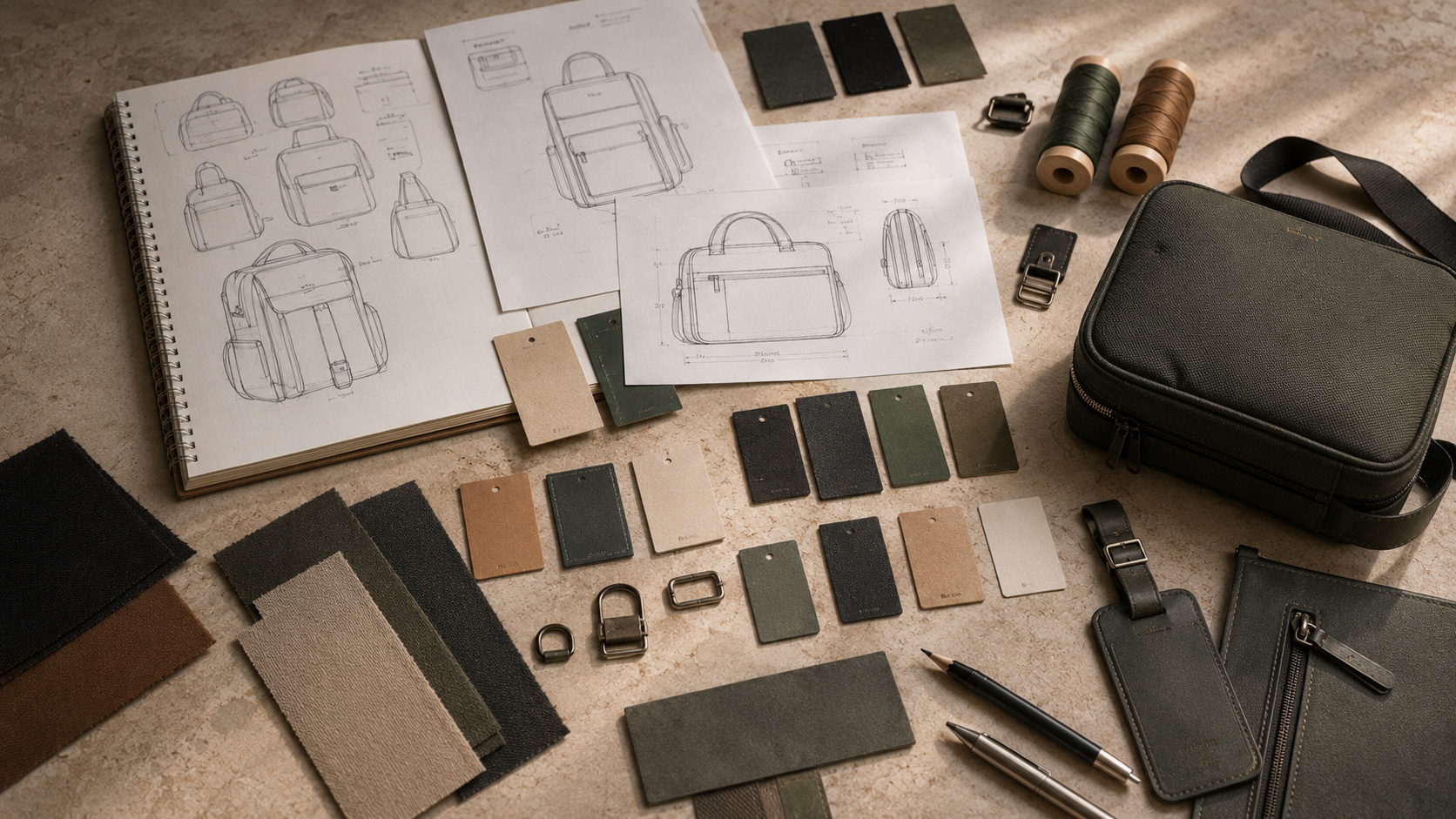
Development routes
These descriptions are practical guides rather than legal definitions. An actual project may combine OEM, ODM and private-label elements.
Development or production is based mainly on the client’s design, specifications or reference product. PUEN helps turn the information into a workable product brief and coordinates the appropriate manufacturing route.
Existing experience, concepts or adaptable constructions are used to create a suitable product. Materials, functions, dimensions and brand details are refined around the project requirements.
A client-branded product can range from an existing style with suitable branding to a fully customised collection with dedicated product, component and packaging details.
What We Offer
Product feasibility is assessed from the intended use, specification, materials, construction, components, quantity and commercial objectives.
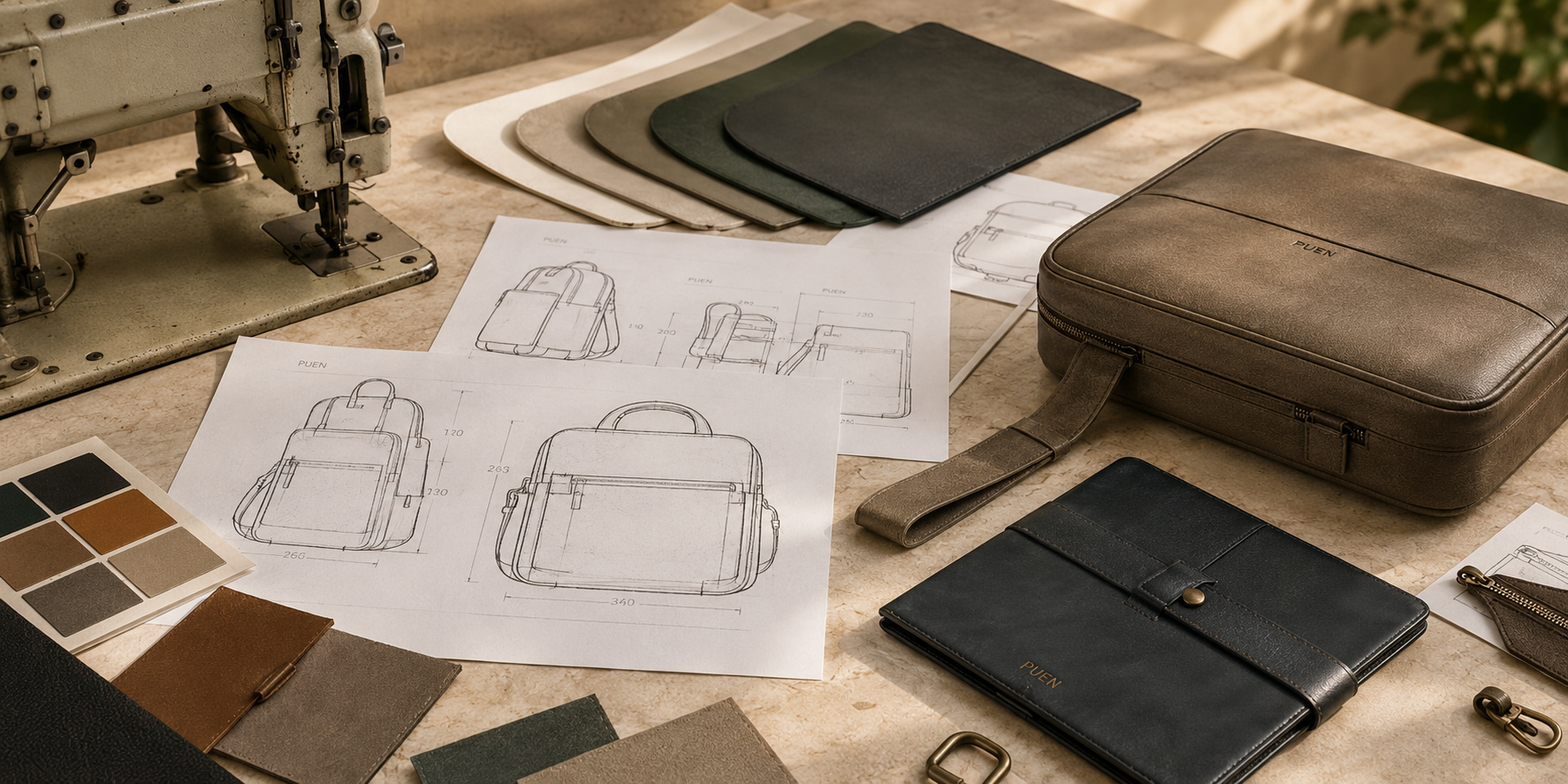
Everyday, business, travel and programme-specific backpack formats developed around function, construction and intended use.
Professional carrying solutions with considered protection, organisation, access, handles and shoulder-carry details.
Flexible travel formats whose capacity, compartments, straps and handling details can be defined for the application.
Compact storage products developed for travel, technology, personal items, kits or coordinated product collections.
Purposeful reusable formats considered around material, construction, brand presentation and the expected programme life.
Suitable luggage and travel formats assessed according to construction, components, tooling, quantity and project scope.
Defined-use carrying solutions reviewed around the item being carried, operating environment and technical brief.
Who It Is For
Development process
A structured process makes product decisions, responsibilities, samples, approvals and relevant quality arrangements visible.
We clarify the user, product purpose, target market, quantity, cost guidance, timing and commercial priorities.
Dimensions, functions, construction, compartments, branding and packaging requirements are organised into a working specification.
PUEN reviews practical manufacturing routes according to the specification, quantity, construction and project requirements.
Materials, linings, zips, buckles, hardware, webbing and other components are considered against function, appearance and cost.
The appropriate sample route is coordinated, reviewed and revised before the approved specification proceeds to production.
Production communication, agreed checkpoints and inspection arrangements are coordinated according to the project scope.
Packing, labelling, delivery requirements and suitable logistics support are aligned with the approved project plan.
Product specification
A clear working specification helps align the client, PUEN, material and component sources, sampling and the selected manufacturing partner.
Cost engineering
PUEN reviews the relationships between function, materials, construction and the complete project cost. The objective is a workable specification—not an unsupported lowest-price promise.
Supplier & Quality Coordination
PUEN assesses suitable manufacturing routes based on the product specification, construction, order quantity and project requirements. Supplier selection, production checkpoints and inspection arrangements are then defined according to the agreed project scope.
Manufacturing partners are assessed according to product type, materials, construction, quantity, quality requirements and delivery schedule.
Approved samples, specifications, colours, components, branding positions, packaging and workmanship requirements are confirmed before production.
Production progress and relevant quality checkpoints are coordinated according to the complexity, quantity and risk profile of the project.
Finished products, packing, quantities and shipping arrangements are reviewed against the agreed project requirements before delivery.
Commercial planning
PUEN confirms the practical requirements after reviewing the product, construction, materials, components, quantity and intended market.
MOQ varies by material, construction, components, colour and manufacturing process.
Custom materials, colours, components and moulds may increase the minimum quantity and development cost.
Sample, setup, tooling and courier costs are reviewed and confirmed before the relevant work begins.
Why PUEN
PUEN acts as a Singapore-based product-development and sourcing partner, coordinating the decisions that connect the brief to sampling, production and delivery.
Function, dimensions, materials, construction, components, branding and target cost guidance are defined together.
Manufacturing routes are assessed according to product type, quantity, construction and project requirements.
Samples, revisions, approvals and applicable setup or tooling requirements are coordinated before production.
Relevant checkpoints, packaging and logistics are agreed according to the product and project scope.
Frequently asked questions
Product feasibility, manufacturing route, responsibilities, quantities, costs and timing are confirmed after PUEN reviews the project brief.
PUEN operates as a Singapore-based product development, sourcing and project-management partner. We work with suitable manufacturing partners selected according to the OEM or ODM product specification, quantity, construction and project requirements rather than claiming that every product is made in a PUEN-owned factory.
For PUEN projects, OEM generally refers to development or production based mainly on the client’s design, specification or reference. ODM uses existing experience, concepts or adaptable constructions to create a suitable product. An actual project may combine elements of OEM, ODM and private-label supply.
PUEN can assess an OEM or ODM product from a sketch, reference image, physical sample or written brief. Product dimensions, function, construction, materials, components, branding, quantity, target cost guidance and required market should be clarified before sampling.
An initial OEM or ODM assessment should include the intended product and use, reference materials, target quantity, dimensions, functions, preferred materials and components, branding, packaging, target market, budget guidance and required timing. PUEN can then recommend a suitable development and sourcing route.
There is no universal minimum order quantity for all OEM or ODM projects. MOQ varies according to material, colour, construction, components, moulds, branding and manufacturing process. PUEN will confirm the applicable minimum after the product specification and supply route are assessed.
An OEM or ODM project can use custom materials, colours and components when technically and commercially feasible. Special production, dyeing, hardware or mould requirements may increase minimum quantities, sampling time and development cost, which PUEN will clarify before proceeding.
PUEN coordinates the appropriate OEM or ODM sample route according to the project stage. This may include material or component references, prototype samples, revised samples and a pre-production sample. Sample, setup, tooling and courier costs are confirmed before work begins.
PUEN can support suitable OEM and ODM projects connected to clients and markets outside Singapore. Product feasibility, communication, destination requirements, logistics and commercial terms are assessed case by case through PUEN’s Asian manufacturing and supply network.
Clients should hold the necessary rights to any trademarks, designs and artwork they provide. Ownership and permitted use of product designs, tooling, moulds and other development outcomes should be confirmed in writing before the OEM or ODM project begins. PUEN does not imply a universal legal arrangement.
OEM / ODM development
Share what the product needs to do, who it is for, the intended market, target quantity, cost guidance and required timing. PUEN will review the information and recommend a practical next step.